


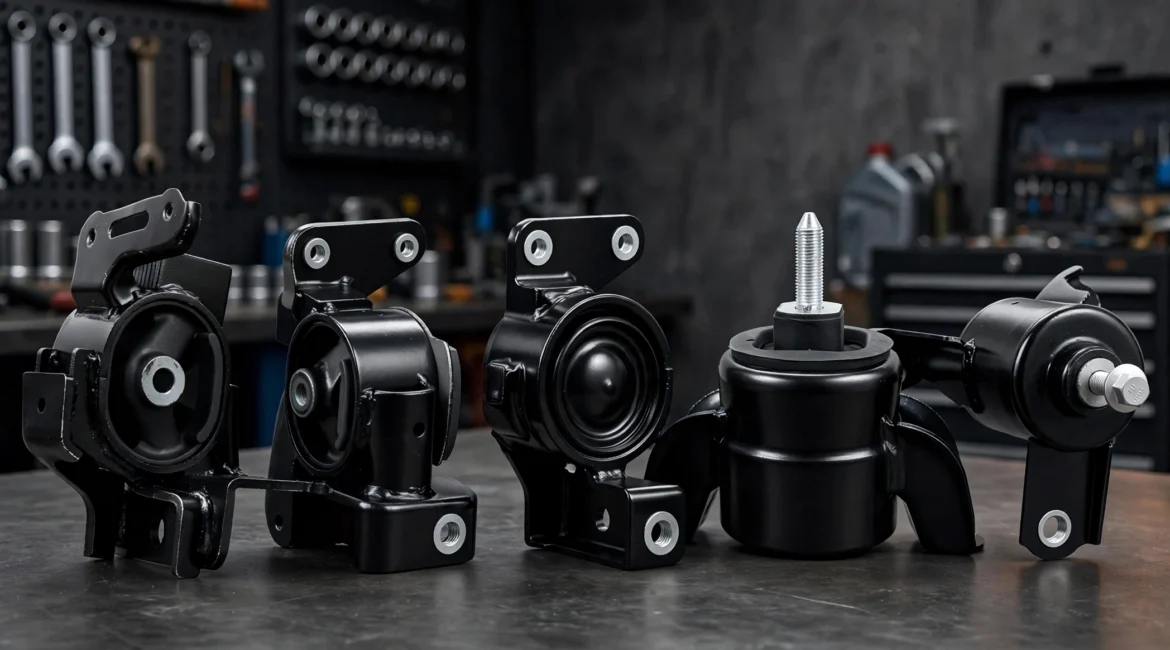
Surely you have felt at some point that your car vibrates strangely when stopped at a traffic light, or you hear a dry thud when accelerating or shifting gears. Although we often think it is an engine problem, the reality is that the culprit is usually much simpler: engine and transmission mounts.
What are they and what are they for?
Imagine that the engine and transmission are gigantic, very heavy pieces of metal that move with force every time you accelerate. If they were bolted directly to the car’s chassis, the noise and vibration inside the cabin would be unbearable.
That is where mounts come in. They are parts that combine reinforced metal and special high-strength rubber. Their job is to support that weight and, at the same time, act as “cushions” that absorb all vibration to make your ride smooth and quiet.
Signs that they need urgent replacement:
Mounts are exposed to constant stress, extreme heat, and sudden movements. Over time, the rubber cracks, tears, or gives way. Pay attention to these signs:
- Excessive vibration: You feel the tremor directly in the steering wheel, pedals, or dashboard when the car is running but stationary.
- Clunks when accelerating or braking: When starting or shifting gears, you hear a metallic “clonk” in the front. The engine is moving too much.
- Misaligned parts: A broken mount causes the engine to tilt, which can damage hoses, cables, or the transmission in the long run.
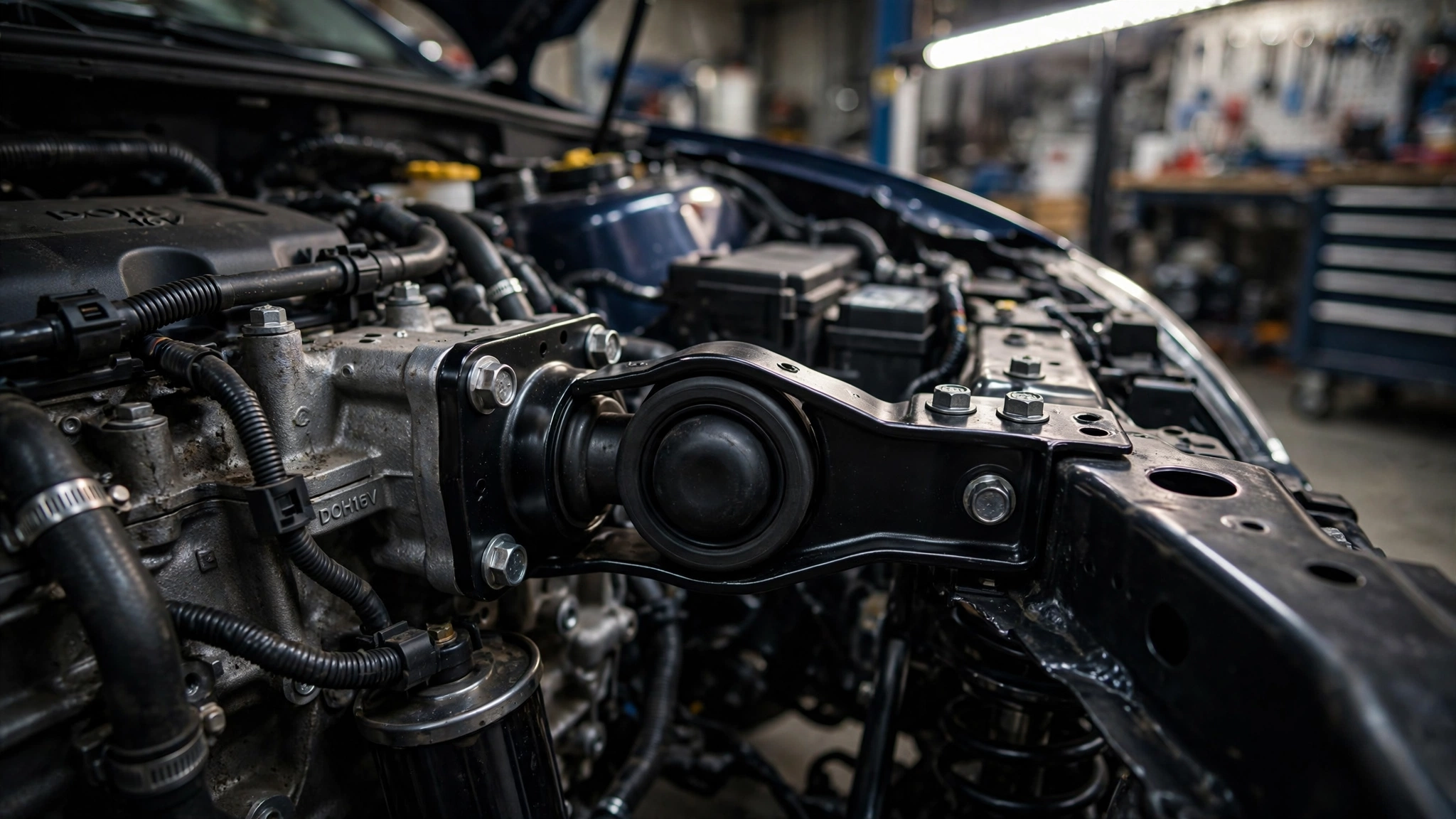
Do not save on your safety
When a mount fails, you don’t just lose comfort; you put very expensive components of your vehicle at risk. When replacing them, choosing components with precision engineering and high-strength rubber guarantees that your car recovers that factory-smooth feel and that the repair lasts for thousands of kilometers.